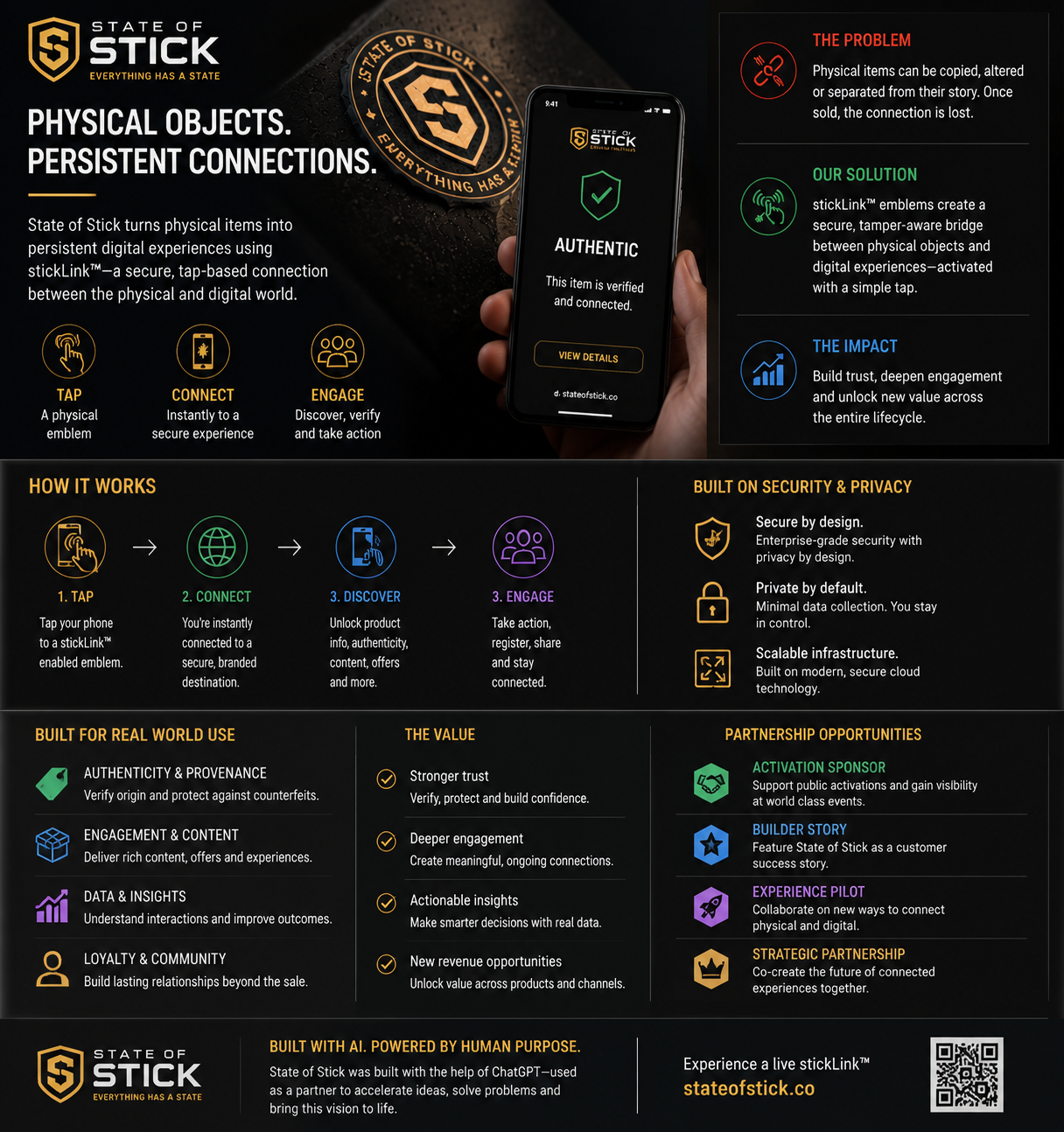
State of Stick can look like a sudden combination: physical emblems, software, laser fabrication, connected experiences, product identity, and analytics.
It makes more sense when you see the work that came before it.
Long before this company had a name, I was building drones, working with remote-control systems, experimenting with electronics, making websites, automating digital work, and learning how to turn a design file into a real object.
Those projects were not a straight business plan. They were a long education in one recurring problem: how do physical systems and digital instructions work together reliably?
Controllers Teach You to Think in Relationships
A controller-based system is never just one part.
Inputs affect behavior. Power changes performance. Weight changes response. Software assumptions meet physical reality. A small failure at one layer can make the whole experience feel broken.
That way of thinking carries directly into connected products. The physical object, the moment of interaction, the mobile destination, the customer’s expectation, and the business outcome all have to agree with one another.
Fabrication Changed the Question
When I began working with laser equipment, digital design became physical production.
A line on a screen now had consequences: material behavior, tolerances, finish, readability, assembly, durability, and whether the final piece felt worth keeping.
In 2023, experimenting with a new material led to more physical product ideas. The original focus was the material and what could be made from it. The connected layer came later, when I began asking what else the object could do after it left the workshop.
The Connection Was an Afterthought—Then It Became the Platform
Adding a tap experience was not the original product idea. It was a second question:
What if this physical piece could keep telling its story?
That question opened a much larger space. A physical object could lead to instructions, registration, content, rewards, event experiences, product records, or an evolving destination.
The emblem remained important, but it stopped being the whole product. The larger system became the relationship between the object, the experience, and the person choosing to interact with it.
A Multidisciplinary Company on Purpose
State of Stick combines skills that are often separated into different vendors:
- physical product design,
- small-batch fabrication,
- connected interaction design,
- web software,
- customer experience,
- and business storytelling.
That combination is not proof that every idea is finished or every use case is right. It is the reason we can test an idea as a complete experience instead of passing it from slide deck to slide deck.
The drones, controllers, websites, lasers, and prototypes were not detours. They were the workshop where the way of thinking behind State of Stick was built.